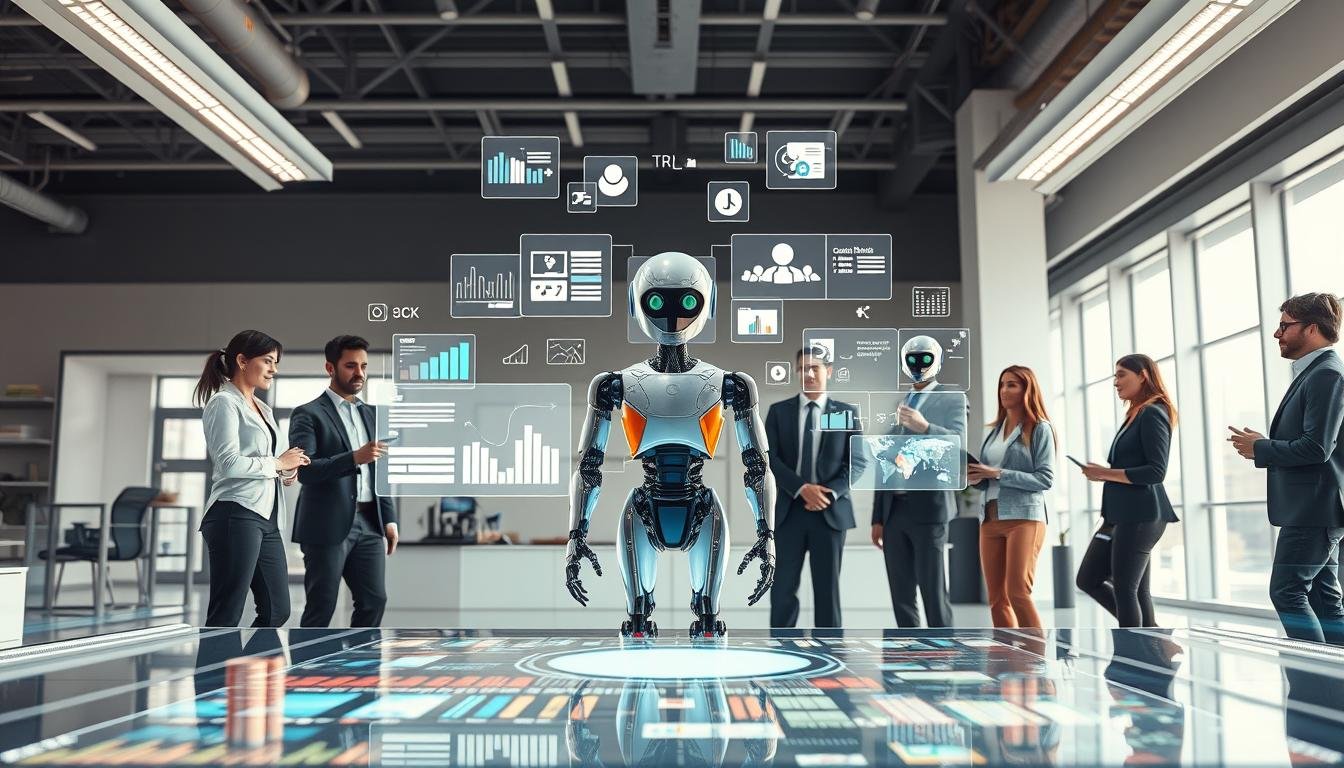
Did you know that over 70% of educators think AI can make a big difference in teaching? This shows how important artificial intelligence in education is becoming. You’ll see how AI can make your digital classroom better, more personal, and fun for learning.
AI helps teachers teach better, students learn more, and school work gets easier. It makes learning more exciting for students too.
Table of Contents
Key Takeaways
- AI enhances teaching methods and student outcomes.
- Personalized learning experiences improve student engagement.
- Administrative tasks are streamlined with AI.
- Educators can focus more on teaching with AI assistance.
- AI integration is becoming increasingly important in education.
The Rapid Transformation of Educational Technology
Education is changing fast thanks to new tech. This change comes from tech advances and new learning needs.
Recent Shifts in Digital Learning Environments
Digital classrooms are now common. Machine learning in schools makes learning more personal. Learning is becoming more interactive and fun.
How the Pandemic Accelerated AI Adoption
The pandemic pushed schools to use AI faster. Educational technology trends have changed a lot. Schools now use tech for remote and hybrid learning.
Statistics on Technology Implementation in U.S. Schools

Many U.S. schools have invested in tech. A lot of schools use AI tools to improve teaching.
This change is making education better and more accessible. Exploring AI in education will show you even more cool uses.
AI and Digital Transformation in Education: Breaking News and Trends
As you explore the world of educational technology, it’s key to keep up with the latest in AI and digital change. The education field is seeing big steps forward in AI, with online learning sites getting smarter.
Latest Research Findings on AI Effectiveness
Recent studies show AI can really boost technology-enhanced teaching by making learning more personal. For example, AI can adjust to what each student needs, leading to better results.
- AI tools are helping teachers with grading and feedback.
- AI creates personalized learning paths for students.
- AI helps spot learning disabilities early on.
Major Educational Technology Announcements of 2023
In 2023, we’ve seen big news in educational tech, with a focus on AI in online learning. Big names in the field have introduced new tools and services to improve teaching with technology.
Key Players Shaping the Educational AI Landscape
Google, Microsoft, and Coursera are leading the way in AI for learning. Their work is changing education, making it more available to everyone.

By keeping up with these updates, teachers and school leaders can see how AI can help improve learning.
How Leading U.S. School Districts Are Implementing AI Solutions
Leading school districts in the U.S. are using AI to change education. They are giving students new digital tools. This makes learning better for everyone.
Innovative Programs in Urban School Systems
Urban schools are starting AI programs to help students. They use AI to create learning plans for each student. This has made students more interested in learning and do better in school.
Rural Schools Leveraging AI to Overcome Resource Limitations
Rural schools have less money and resources. But, AI helps them offer top-notch learning materials. This makes learning in rural areas as good as in cities.
Administrator Perspectives on AI Integration
School leaders are key to making AI work in schools. A survey shows they think AI will make learning more personal. They also say teachers need training to use AI tools well.
Classroom-Ready AI Tools Making Headlines
Artificial intelligence is changing classrooms everywhere. New tools are making learning better and more personal. They help teachers and students in big ways.
Intelligent Tutoring Systems
Intelligent tutoring systems are changing how we learn. They offer one-on-one help. Here are two examples:
Carnegie Learning’s MATHia Platform
Carnegie Learning’s MATHia gives feedback and guidance in real time. It helps students understand tough math concepts. As “MATHia is designed to provide a more effective and engaging way to learn math”, it’s a hit with teachers.
DreamBox Adaptive Learning
DreamBox Adaptive Learning meets students where they are. It uses AI to adjust math problem difficulty. This way, students stay challenged but not too stressed.
AI-Powered Writing Assistants for Students
AI writing tools are also making a big difference. They help students write better and more confidently.
Grammarly for Education
Grammarly for Education checks grammar and spelling. It also offers tips to improve writing. It’s a big help for students wanting to get better at writing.
Paper’s Tutoring Platform
Paper’s Tutoring Platform gives feedback on writing. Teachers say it’s changing how they teach writing.
“AI-powered writing assistants like Paper’s Tutoring Platform are changing the way we approach writing instruction.”
How AI Is Transforming Assessment and Feedback
Today’s digital classrooms are changing thanks to AI. It’s making assessments and feedback better, faster, and more personal. This is because we need ways to check work that are efficient, accurate, and tailored to each student.
Automated Grading Technologies
AI has brought big changes with automated grading. These systems use smart algorithms to check student work. This saves teachers a lot of time.
Gradescope and Similar Platforms
Gradescope is leading this change. It uses AI to grade assignments quickly. This means teachers have more time to teach and students get feedback right away.
Real-Time Learning Analytics
AI also helps with real-time learning analytics. These tools give insights into how students are doing as they learn. Teachers can then adjust their teaching to help students who need it most.
Impact on Teacher Workload and Student Performance
These tools can really help teachers and students. By automating some tasks, teachers can focus more on teaching. This makes learning better for everyone.
| Feature | Traditional Assessment | AI-Enhanced Assessment |
|---|---|---|
| Grading Method | Manual Grading | Automated Grading |
| Feedback Time | Delayed Feedback | Immediate Feedback |
| Personalization | Limited Personalization | Highly Personalized |
The Rise of AI Teaching Assistants in Your Classroom
As we look into the future of education, AI teaching assistants are becoming key in classrooms. These tools help teachers, keep students engaged, and make learning personal.
Virtual Assistants Supporting Instruction
Virtual assistants are now a big part of education. They help with grading, analyzing data, and giving feedback to students right away.
IBM’s Teacher Advisor With Watson
IBM’s Teacher Advisor With Watson is a great example. It uses AI to look at lots of educational data. This helps teachers see where students need help and improve their teaching.
Chatbots for Student Support and Engagement
Chatbots are also being used to help students. They answer questions, guide with coursework, and help with study habits.
Recent Developments in Educational Chatbot Technology
Chatbot tech has gotten better, making them understand more complex questions. This opens up new ways to use them in schools, like supporting mental health and helping students with special needs.
| AI Teaching Assistant Features | Benefits for Teachers | Benefits for Students |
|---|---|---|
| Automated Grading | Reduces workload, allowing more time for teaching | Receives immediate feedback on assignments |
| Personalized Learning Paths | Helps tailor instruction to individual student needs | Learning is tailored to their pace and style |
| Real-time Support | Assists in identifying and addressing student struggles | Gets immediate help when needed |
Breaking Barriers: AI Solutions for Special Education
Artificial intelligence is changing special education for the better. It’s making schools more inclusive for all students.
Assistive Technologies Powered by AI
AI is transforming special education with new tools. These tools help students with different challenges.
Speech Recognition and Text-to-Speech Advancements
AI has made speech and text systems much better. Now, students with speech or hearing issues can communicate easier.
Personalized Learning Paths for Diverse Needs
AI lets schools create learning plans for each student. This way, every student gets the help they need.
Success Stories from Inclusive Classrooms
Teachers are seeing great results with AI. A study showed students using AI tools learned more.
| AI Tool | Benefit | Impact |
|---|---|---|
| Speech Recognition | Improved communication | Enhanced student engagement |
| Text-to-Speech | Assistance for reading difficulties | Better comprehension |
| Personalized Learning Paths | Tailored education plans | Increased student progress |
“AI has the power to change special education. It offers personalized support for all students.”
Federal and State Initiatives Supporting Educational AI
AI is changing education, and governments are helping a lot. They support AI in schools with different programs. These efforts aim to improve educational technology trends and boost ai applications in learning.
Recent Policy Developments and Funding
New policies are giving money to schools to use AI. They offer grants for new tech and training for teachers. This helps teachers use AI better in their classrooms, making technology-enhanced teaching more effective.
The National AI Initiative for Education
The National AI Initiative for Education is a big program. It brings together AI research and development nationwide. It wants to make education better by using AI technologies.
How Schools Can Access Available Resources
Schools can get help by applying for federal grants and joining state programs. They can also work with tech companies. This gives them access to the latest AI tools and training.
Addressing Critical Concerns: Privacy and Equity
AI is changing digital classrooms, but we must tackle privacy and equity issues. The use of AI tools in schools raises questions about data safety and fairness. There are worries about biased algorithms and data misuse.
Recent Controversies in Educational Data Usage
There have been big debates about using student data in schools. For example, personalized learning raises questions about data protection. A recent report by the National Education Association called for better data safety in schools.
“The use of AI in education must be accompanied by a commitment to transparency, accountability, and equity.” –
Ensuring Equitable Access to AI-Enhanced Learning
Not all schools have access to AI tools, which widens the gap. Schools in poor areas struggle to get these technologies. To fix this, there’s a push for more funding and partnerships with tech companies.
Expert Recommendations for Responsible Implementation
Experts suggest several ways to use AI wisely in schools:
- Do thorough checks for bias and privacy risks.
- Make clear rules for handling student data.
- Be open about AI use in classrooms.
By following these steps, teachers can use AI to make learning fair and effective for everyone.
The Economic Impact of AI Education Preparation
AI is changing education, and its economic effects are key for educators and policymakers. AI in education can greatly impact the economy. This is true for workforce development and partnerships with industries.
Workforce Development and Future Skills
AI in education will change the future workforce. It’s vital to teach skills that work with AI, like critical thinking and creativity. Investing in AI education can lead to a more skilled and adaptable workforce. This workforce will be ready for the economy’s fast changes.
Industry Partnerships with Educational Institutions
Industry partnerships with schools are growing with AI. These partnerships help create educational programs that fit industry needs. This ensures students have the skills employers want.
How Companies Are Investing in AI Education
Companies are putting a lot into AI education. They fund AI research, create AI tools for learning, and partner with schools. For example, tech companies are making online learning platforms with AI. This helps shape the future workforce and boosts economic growth.
What’s Next: Emerging AI Technologies for Education
Looking ahead, new AI technologies will change education a lot. You’ll see big improvements in how AI helps teach and learn.
Immersive Learning with AI and Virtual Reality
AI and virtual reality are making learning more fun and interactive. You can dive into tough topics in a way that grabs your attention. This makes learning better and more fun.
Predictive Analytics for Student Success
AI is also changing how we help students succeed. It looks at student data to find those who might struggle. This lets teachers help early, before it’s too late.
Research Breakthroughs on the Horizon
Recent studies show AI’s power in predicting student success. For example, one study found AI can guess how well students will do. Here are some key findings:
| Research Focus | Key Findings |
|---|---|
| Predictive Analytics | AI models can predict student performance with high accuracy |
| Immersive Learning | AI-enhanced VR improves student engagement and understanding |
These new technologies will change education. They’ll make learning more effective and tailored to you.
Conclusion
AI is changing education in big ways. It makes learning more efficient, personal, and fun. Knowing about AI in education is key to using it well.
AI in education is more than just new tech. It changes how we teach and learn. Think about how AI can help you reach your educational goals. The possibilities are endless, and keeping up with new AI trends is important.
Embracing AI in education opens up new chances for growth. Look into how AI can help you in your teaching or learning. It can help you achieve your goals.
Read more:The Rise of Intelligent Tools Transforming All Industries