We’re on the edge of a creative revolution. This is thanks to Artificial Intelligence (AI) in many fields. The way we make, share, and enjoy content is changing fast.
AI is opening up new ways to express ourselves creatively. It’s also changing how we get and use information.
Table of Contents
Key Takeaways
- The integration of AI is driving a creative revolution across industries.
- AI is transforming the way we create, produce, and consume content.
- Groundbreaking innovations in AI are enabling new forms of artistic expression.
- The future of content creation is being reshaped by AI-driven technologies.
- We’re witnessing significant advancements in AI-powered content creation tools.
The Creative Revolution: How AI is Transforming Artistic Expression
AI is changing how we make art, music, and design. It’s a mix of technology and creativity, leading to new art forms.
The Convergence of Technology and Creativity
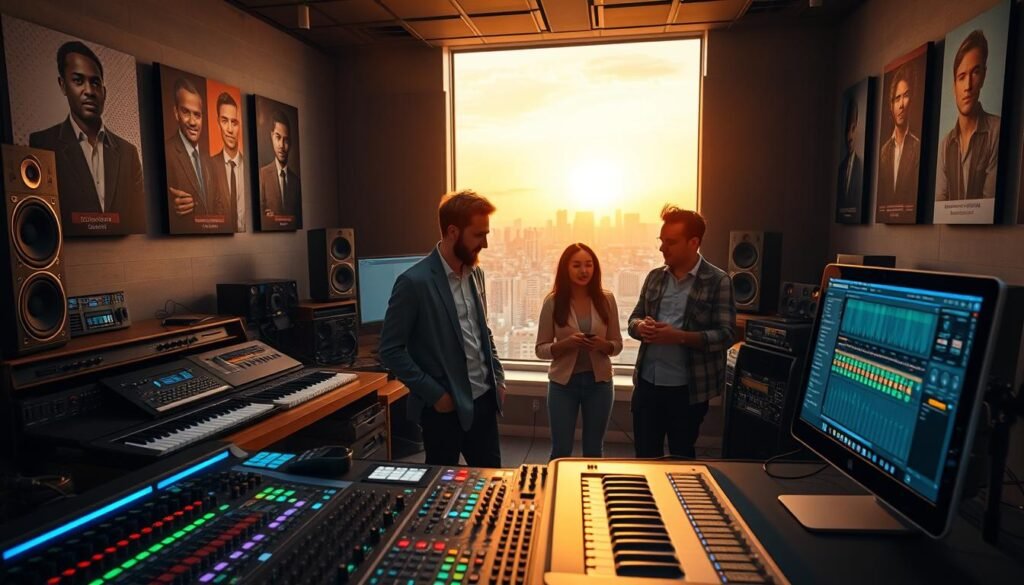
AI is teaming up with creative fields, starting a new wave of innovation. AI can now make music, art, and even help with writing. For example, AI in music production creates complex tunes and even albums.
This mix of human creativity and AI’s power opens up new ways to express art.
Breaking Down Creative Barriers with AI
AI is making creative tools available to more people, letting them show their talents. It’s breaking down barriers, allowing artists to try new things. AI in visual arts, for instance, creates art we never thought possible.
This not only boosts creativity but also makes it more open to everyone.
Major AI Breakthroughs in Creative Industries: An Overview
AI and creativity are coming together in new ways, changing the creative industries. AI is not just a tool; it’s a partner that’s pushing the limits of art.
Defining Moments in AI Creative Technology
There have been many important moments in AI’s journey in creative fields. Generative Adversarial Networks (GANs) have made it possible to create realistic images and videos. Natural Language Processing (NLP) has helped AI write text that makes sense and fits the context.
AI tools for graphic design, music, and video editing have also made a big difference. They’re making the creative process better and making creative tech more accessible. This means more people can get involved in making art.
The Economic Impact of AI-Driven Creative Tools
AI-driven creative tools have big economic benefits. They help creatives do more of what they’re good at, like being creative and innovative. This leads to more productivity and new ways to make money.
AI tools are also changing how businesses work. For example, AI-generated content helps with personalized marketing. This lets companies send messages that really speak to their audience.
AI in Music Production: Composing the Future
AI is changing how we make music. It’s becoming key for musicians and producers. It offers new ways to create and produce music.
Algorithmic Composition and Sound Design
AI can make music based on what you want, like genre and mood. This is changing sound design. Artists can now try out new sounds and styles.
Notable AI Music Platforms
Platforms like Amper Music and AIVA lead in AI music. They make composing easier for artists.
Artist Collaborations with AI
Artists are working with AI to improve their work. AI can suggest chords or even help write songs.
AI-Assisted Mixing and Mastering
AI is also changing how we finish music. AI tools help mix and master tracks. They make sure the music sounds great.
Case Study: Hit Songs Created with AI
Many hit songs have AI help. For example, Taryn Southern’s album “Break Free” used AI. These examples show AI’s power in making hit music.
| AI Music Platform | Key Features | Artist Collaborations |
|---|---|---|
| Amper Music | AI-driven composition, customizable tracks | Yes |
| AIVA | Advanced sound design, adaptive composition | Yes |
Transforming Visual Arts Through AI
AI is changing the visual arts world with new tools and methods. It’s not just improving old techniques but also creating new art forms. This change comes from better machine learning, like Generative Adversarial Networks (GANs).
Generative Adversarial Networks in Fine Art
GANs are key in making AI art. They work by competing neural networks to create realistic and complex art. This art challenges old ideas about creativity and who makes art.
Prominent AI Art Tools and Platforms
Many AI art tools and platforms are now popular. Deep Dream Generator and Prism let users turn images into art inspired by famous artists. These tools make creating art easier and open up new ways to express oneself.
Artistic Styles and Techniques
AI can copy many artistic styles, from Impressionism to Cubism. This lets artists try out different styles and techniques. It helps them explore new creative paths.
AI Art Exhibitions and Market Response
AI art is getting more attention with more exhibitions and sales. For example, “Edmond de Belamy” by Obvious was sold at Christie’s for $432,500. This shows AI art is being recognized in the traditional art world.
But, opinions on AI art vary. Some love it, while others are unsure. Yet, AI art is likely to keep growing as AI tech improves and artists explore its possibilities.
Revolutionizing Graphic Design with AI Tools
AI is changing graphic design in big ways. It lets designers work faster and try new things.
Automated Design Systems and Their Capabilities
Automated design systems are making graphic design better. They give designers smart tools to do routine tasks. This lets designers think more about creative ideas.
Key capabilities of automated design systems include:
- Template generation
- Color palette suggestions
- Font pairing recommendations
The Designer-AI Collaboration Model
Designers and AI are working together in new ways. AI helps designers make better designs faster.
AI has helped many design projects. For example, it’s used to make custom marketing materials quickly.
Workflow Integration Strategies
To get the most from AI in graphic design, we need to fit it into our current work. AI can help with tasks like editing images or suggesting layouts. But designers should keep making the big creative decisions.
AI’s Impact on the Film Industry
The film industry is on the verge of a big change, thanks to AI. AI is not just a tool; it’s a creative partner that’s changing the game.
Script Analysis and Development
AI is making a big difference in script analysis and development. It looks at successful scripts to find patterns. This helps writers create better stories.
AI can also guess how audiences will react. This lets writers make changes early on.
Visual Effects and Animation Breakthroughs
AI is changing how we see movies with its visual effects and animation. It can make complex visuals and animations. This makes movies more immersive.
Real-time Rendering Innovations
Real-time rendering is a big deal. It lets filmmakers see complex scenes as they happen. This makes production faster.
Character Animation and Digital Humans
AI has improved character animation. It can make digital humans that seem real. These digital humans can interact with real actors.
AI in Post-Production and Editing
In post-production, AI helps with editing, color grading, and sound design. AI tools can do repetitive tasks. This lets editors focus on creativity.
Film expert
“AI is not replacing human creativity but augmenting it, allowing us to explore new frontiers in storytelling.”
Here’s a quick look at AI’s role in film production:
| Production Stage | AI Application | Benefit |
|---|---|---|
| Script Analysis | Pattern recognition, predictive analytics | Improved script quality, audience prediction |
| Visual Effects | Real-time rendering, animation generation | Enhanced visuals, reduced production time |
| Post-Production | Automated editing, color grading | Increased efficiency, creative focus |
Fashion Design in the Age of AI
The fashion world is on the verge of a big change. AI is now a key part of how designers work. It lets them make new, unique designs that were once impossible.
AI-Generated Fashion Collections
AI-made fashion collections are getting more attention. Designers use algorithms to come up with fresh designs. This opens up new styles and trends that humans might not think of.
Notable Designer-AI Collaborations
There have been many famous partnerships between designers and AI. For example, designers have used AI to create whole collections. This shows how AI can help make clothes that are both stylish and cohesive.
Consumer Response to AI Fashion
People like AI fashion because it’s different and innovative. As AI gets better, we’ll see more people wanting AI-made clothes.
Predictive Analytics for Trend Forecasting
AI is also changing trend forecasting in fashion. It looks at lots of data to guess what will be popular next. This helps fashion brands stay ahead of trends.
| Trend | Predicted Popularity | Season |
|---|---|---|
| Sustainable Materials | High | Spring 2024 |
| Neon Colors | Medium | Summer 2024 |
| Utility Chic | High | Fall 2024 |
AI-Powered Innovations in Advertising
AI is changing the advertising world by making ads more personal and effective. It uses advanced algorithms to analyze lots of data. This helps create ad campaigns that really speak to people.
Personalized Ad Creation at Scale
AI lets advertisers make ads that feel just right for each person. It looks at what people like and who they are. This makes ads better and gets people more interested.
Performance Metrics and AI Optimization
AI is also key in making ads work better. It keeps an eye on how ads are doing and makes changes to get the best results. It tweaks things like who sees the ad and what the ad looks like.
Case Study: Successful AI Ad Campaigns
A big e-commerce brand saw huge success with AI ads. They got a 30% increase in sales thanks to AI. This shows how AI can really make a difference in ads.
ROI Improvements Through AI
Many businesses have seen big gains with AI ads. AI helps make ads more effective and saves money. This makes marketing more worthwhile and successful.
Gaming Industry: AI as a Creative Partner
AI is changing the gaming world by becoming a key creative partner. The gaming industry is seeing big changes with AI. It’s making game development better and improving how players experience games.
Procedural Content Generation
AI helps create game worlds in a new way. It makes game environments dynamic and varied. This means developers can make more content without doing it all by hand.
NPC Behavior and Dynamic Storytelling
AI makes NPCs act more like real people. It also helps tell stories that change based on what the player does. This makes games more engaging and personal.
Adaptive Game Environments
AI makes games adjust to how good you are and what you like. This gives you a gaming experience that’s just right for you.
Player Experience Personalization
AI looks at how you play to make the game better for you. It offers challenges and content that fit your style.
AI Game Testing and Development
AI is used in making games and testing them too. It finds bugs and glitches faster than old ways. This makes making games quicker and easier.
| AI Application | Benefit | Impact on Gaming |
|---|---|---|
| Procedural Content Generation | Dynamic environments | Enhanced replayability |
| NPC Behavior | Realistic interactions | Immersive experience |
| AI Game Testing | Efficient bug detection | Faster development cycles |
The Future of Content Creation with AI
AI is changing content creation in big ways. It’s making the process more efficient and creative. We’re seeing new ways to create, edit, and share content.
Writing and Editing Assistance
AI tools are helping with writing and editing. They check grammar, offer phrase suggestions, and even create content. This makes writing easier and faster.
Journalism and News Production
AI is helping in journalism too. It analyzes data to write news stories. This includes financial reports and sports updates.
Marketing Content Generation
In marketing, AI creates content like product descriptions and social media posts. It also makes personalized emails. This saves time and makes content more personal.
Multimodal Content Generation
AI lets us create content with text, images, audio, and video. This is great for social media and websites. It makes content more engaging.
- AI-generated videos are getting better. They can make complex videos without needing a lot of video production skills.
- AI tools can also make high-quality audio content. This includes podcasts and audiobooks, with little human help.
Conclusion: Embracing the AI-Creative Partnership
AI has changed the game in creative fields like art, music, film, and design. It’s not just a tool; it’s a partner that opens up new creative paths. This partnership is changing how we think about making art and music.
By working with AI, we can make even more amazing things. It helps artists and creators do their best work. They can focus on the creative ideas, while AI handles the technical stuff.
Looking ahead, AI will bring even more exciting changes to art and entertainment. The future of making content is already here, and it’s all about AI.
Read more: Explore the Ethical Landscape of AI: Challenges and Answers